
What qualification actually approves
Qualification is not a generic nationwide certificate. Supplier programs commonly approve a supplier and a specific item or material code. A crossarm approved for one geometry, load and drilling pattern should not automatically be treated as approved for another configuration.
1. Map the applicable specification
Start with the target utility and material code. Build a compliance matrix for dimensions and tolerances, nominal, exceptional and breaking loads, deflection, drilling, finish, UV protection, flame behavior, electrical properties, marking, packaging and acceptance criteria. Compliance with referenced standards does not replace utility-specific approval.
2. Build the technical dossier
The package commonly includes an approval form, controlled drawings, bill of materials, raw-material certificates, critical suppliers, process flow, control plan, calibration, inspection records, lot traceability, installation instructions and nonconformity handling. Energisa, for example, requires its product approval file to identify materials and suppliers and demonstrate traceability through quality certificates.
3. Manufacture a representative prototype
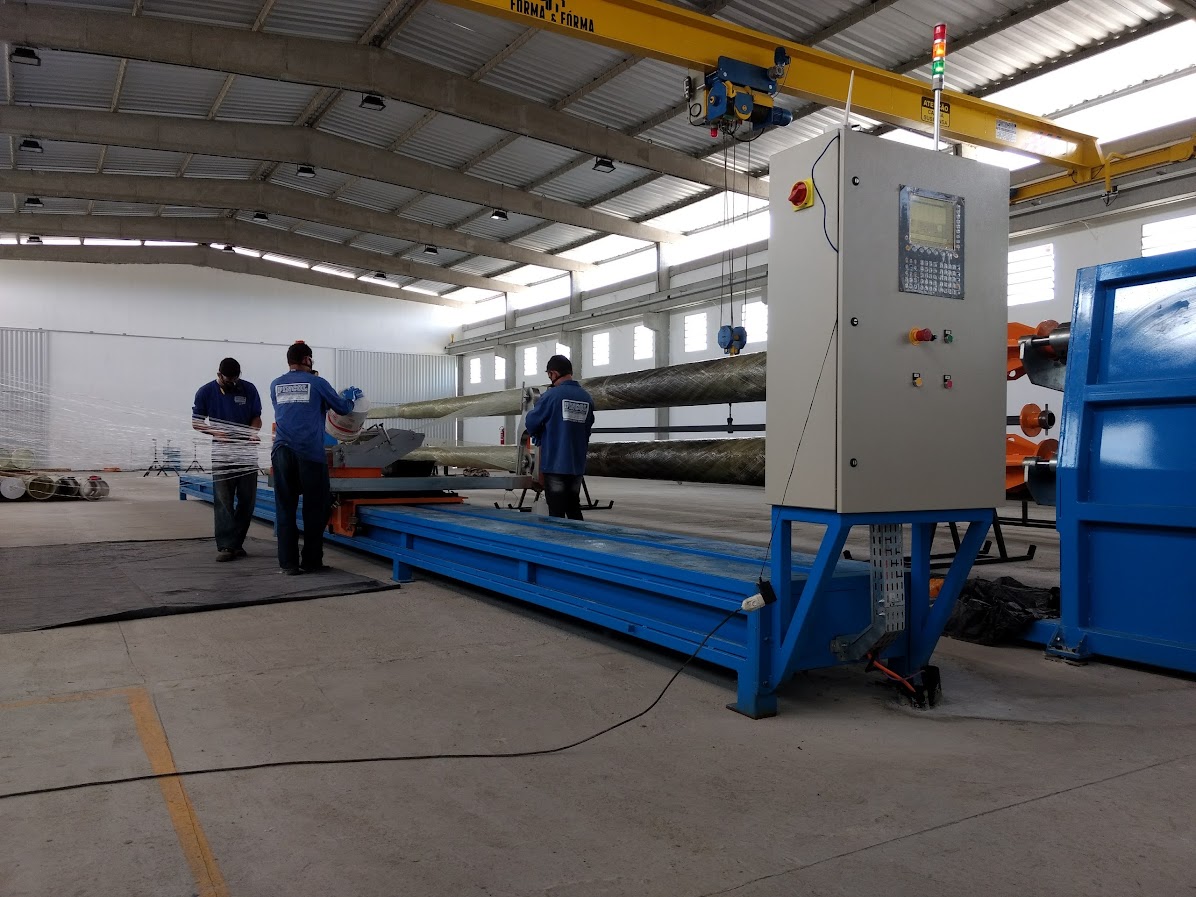
The prototype must reproduce the materials, geometry, tooling and parameters intended for production. Record resin and fiber lots, formulation, orientation, mass, cycle, operator, inspections and drawing revision.
4. Complete type testing
The exact list comes from the applicable specification. Tests often found for FRP poles and crossarms include visual and dimensional inspection, bending at specified loads, breaking load, torsion or drilling torque, water absorption, dielectric strength, UV weathering, flammability or flame propagation and, where applicable, tracking and erosion, long-duration load and end-cap verification. Use a laboratory accepted by the utility; Neoenergia documents provide an example requiring an RBLE-accredited laboratory and RBC-certified instruments.
5. Pass the industrial evaluation
The utility may assess quality systems, capacity, safety, sustainability and manufacturing. The factory must reproduce the tested construction with approved materials, defined parameters, suitable tooling, recorded inspections and trained personnel. Changes to resin, fiber, supplier, geometry, drilling or process require formal control and may require new authorization or testing.
6. Release the pilot and receiving lot
Some utilities request an industrial sample, supervised initial supply or field evaluation. Commercial lots should carry certificates, individual identification, process records and routine or receiving-test results. Acceptance of one lot does not supersede qualification obligations.
7. Maintain approval
Keep documents, calibration and certificates valid; monitor field failures; apply root-cause and corrective action; perform periodic tests; renew registrations; and notify changes before implementation. Supplier manuals allow suspension after nonconformity, field failure, failed receiving inspection, poor audit results or expired documentation.
Checklist before first supply
- ✓ Specification code and revision confirmed
- ✓ Drawing and drilling pattern released
- ✓ Raw materials and sub-suppliers traceable
- ✓ Prototype representative of production
- ✓ Test reports accepted
- ✓ Factory evaluation completed
- ✓ Marking and packaging approved
- ✓ Lot inspection plan defined
- ✓ Engineering changes under control